
Configurations, price lists, variants and commercial rules take too much time and increase the risk of errors.
Manufacturing SMEs
AI, software and integrations for manufacturers that want to improve sales and operations.
We help manufacturing SMEs turn complex catalogues, manual quotations, technical documentation and disconnected systems into practical applications: configurators, portals, automation, dashboards and AI solutions.

When catalogues, quotationsand systems are disconnected,growth slows down.
Many manufacturing SMEs have technical products, complex sales processes and data spread across ERP, CRM, spreadsheets, documents and people’s knowledge. Technology is useful when it removes real friction, rather than adding another tool to manage.
Customers, agents and internal teams struggle to find reliable information on products, compatibility and documentation quickly.
ERP, CRM, e-commerce, portals and internal databases do not always share data in a straightforward, controlled way.
Recurring requests, manuals, FAQs and service histories consume time that could be spent on more critical cases.
We turn manufacturing processes into useful applications.
We start with your company’s actual processes and needs: technical sales, operations, documentation, after-sales and integration with existing systems.
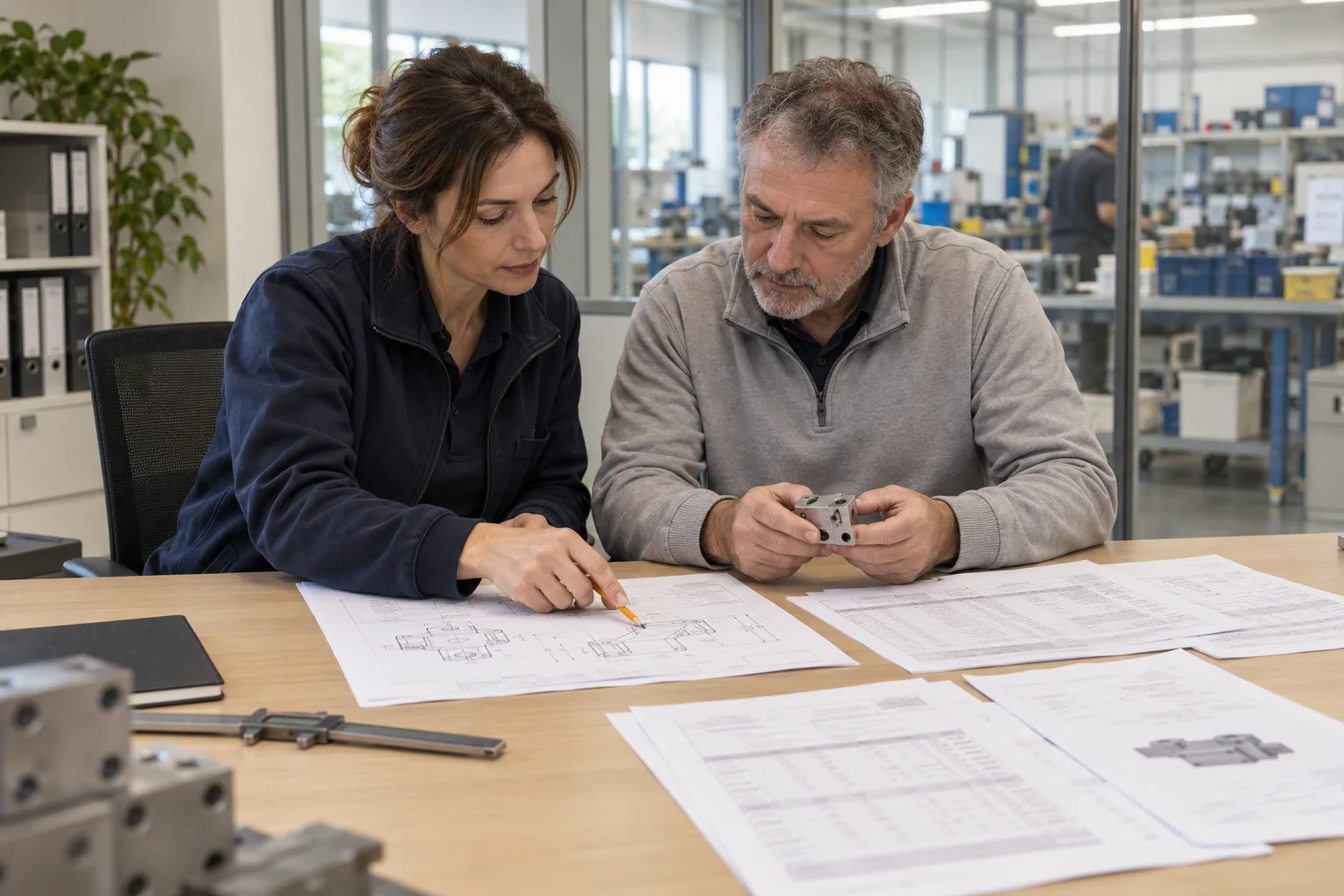
Smoother technical sales
Configurators, quotation tools, agent portals and digital tools to make sales proposals faster and more consistent.
Integrated operations
Custom applications, dashboards and integrations that connect data, orders, statuses, documents and operational systems.
AI for technical knowledge
Assistants and intelligent search tools for catalogues, manuals, technical data sheets, FAQs and internal procedures.
Tech and AI solutions that create value for manufacturing SMEs.
We start with the point where work slows down, costs too much or depends on manual steps that are difficult to scale, rather than with a software product to sell.
Solution
Where it applies
Value for your business
Product configurators and quotation tools
Products with variants, price lists and technical or commercial rules
Faster quotations, fewer errors and better-qualified leads
Customer, agent or reseller portals
Sales networks, B2B, support and product documentation
Fewer operational emails and greater independence for customers and partners
Technical AI assistant
Manuals, catalogues, FAQs, procedures and technical data sheets
Faster searches and better support for teams, customers and agents
Sales and operational dashboards
Sales, orders, leads, progress, tickets and internal KPIs
Faster decisions and visibility into critical processes
ERP/CRM/e-commerce integrations
Business systems that currently duplicate data or tasks
Less manual work and more consistent data across departments
Document automation
Quotations, orders, data sheets, reports, requests and approval workflows
Less time, fewer errors and fewer repetitive tasks
Modernising custom applications
Internal tools built over time that are now difficult to develop further
Better usability, integration and AI components where they add value
Designed for manufacturers, not generic demos.
Technology must support real processes: incomplete data, existing systems, operational constraints, people to involve and results to measure.
We first understand how sales, operations, engineering, customer care and management work.
We build or integrate only where a tailored solution delivers more value than an off-the-shelf product.
ERP, CRM, e-commerce, databases, spreadsheets and internal applications need to work together without creating duplication.
Architecture, security, testing, deployment and maintenance remain part of our work, rather than a problem left to the client.
Time, errors, manual steps, service quality and productivity should improve in observable ways.
Where we can help.
Every business has different priorities. We start with practical use cases rather than an abstract list of technologies.
Sales and pre-sales
Configurators, quotation tools, agent portals, lead qualification, sales documentation and CRM integration.
Ideal when the sales cycle is technical, slow or too dependent on a few people.Operations and back office
Digital workflows, document automation, operational dashboards and integrations between internal systems.
Ideal when too many activities still rely on emails, spreadsheets and manual checks.After-sales and technical support
AI assistants for manuals and FAQs, knowledge bases, request classification, customer portals and ticket dashboards.
Ideal when customer service spends too much time on recurring questions and scattered documentation.From the real process to a solution in production.
A prototype is not enough. The process needs to clarify expected returns, available data, integrations, risks and management after launch.
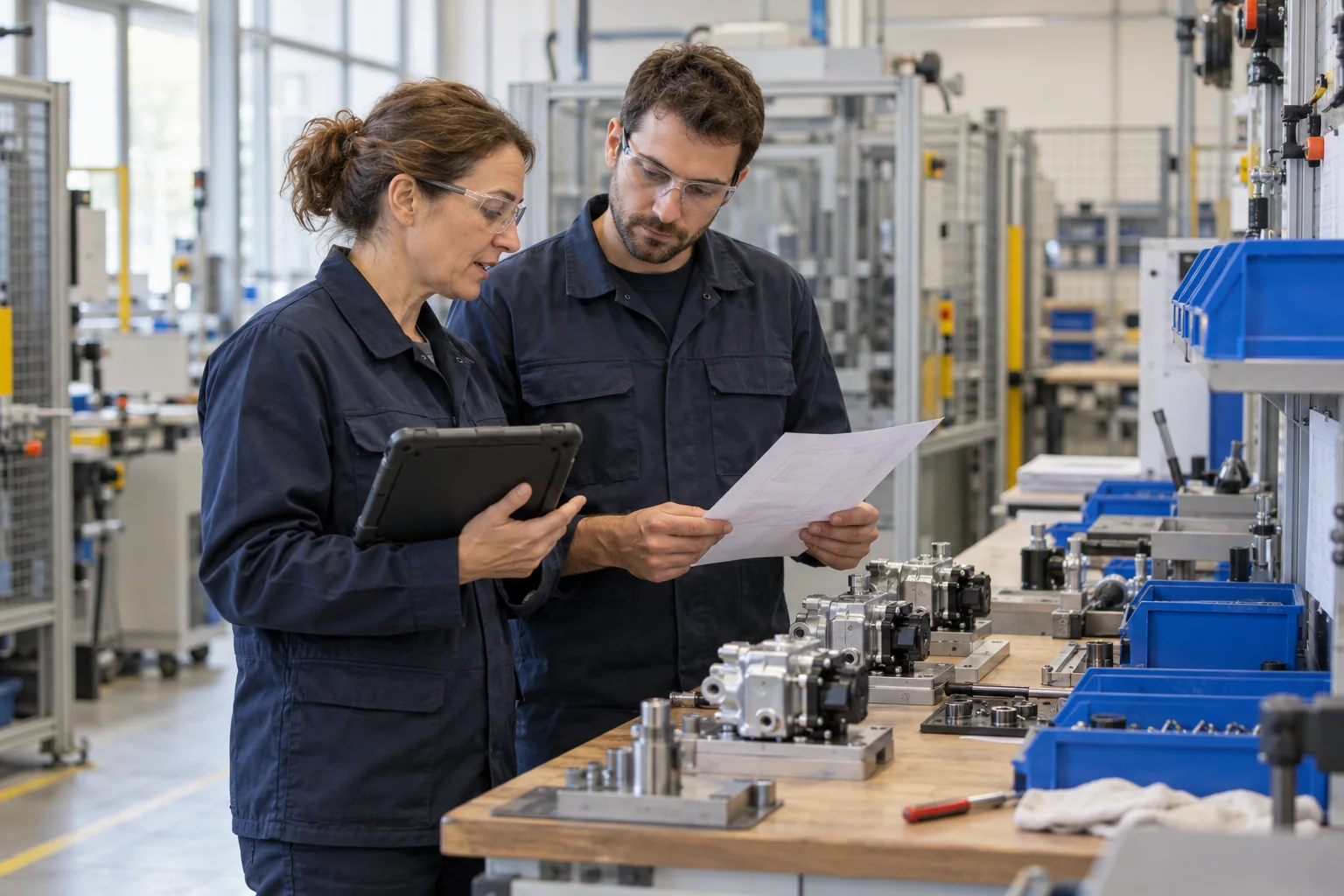
Process analysis
Identify activities, roles, data, systems and points of friction.
Priorities and business case
Assess impact, complexity, costs, risks and expected returns.
Architecture and roadmap
Define the solution, integrations, data, security and deployment plan.
Development and testing
Build, integrate, validate and prepare for launch.
Management and ongoing development
Monitor, maintain and improve the solution over time.
Examples of projects for manufacturing SMEs.
Practical scenarios showing where AI, software and integrations can deliver measurable value.
Technical sales
Integrated configurator and quotation tool
Problem: product variants, price lists and technical rules slow down quotations.
Solution: a web configurator connected to CRM or ERP.
Value: faster quotations, fewer errors and better-qualified leads.
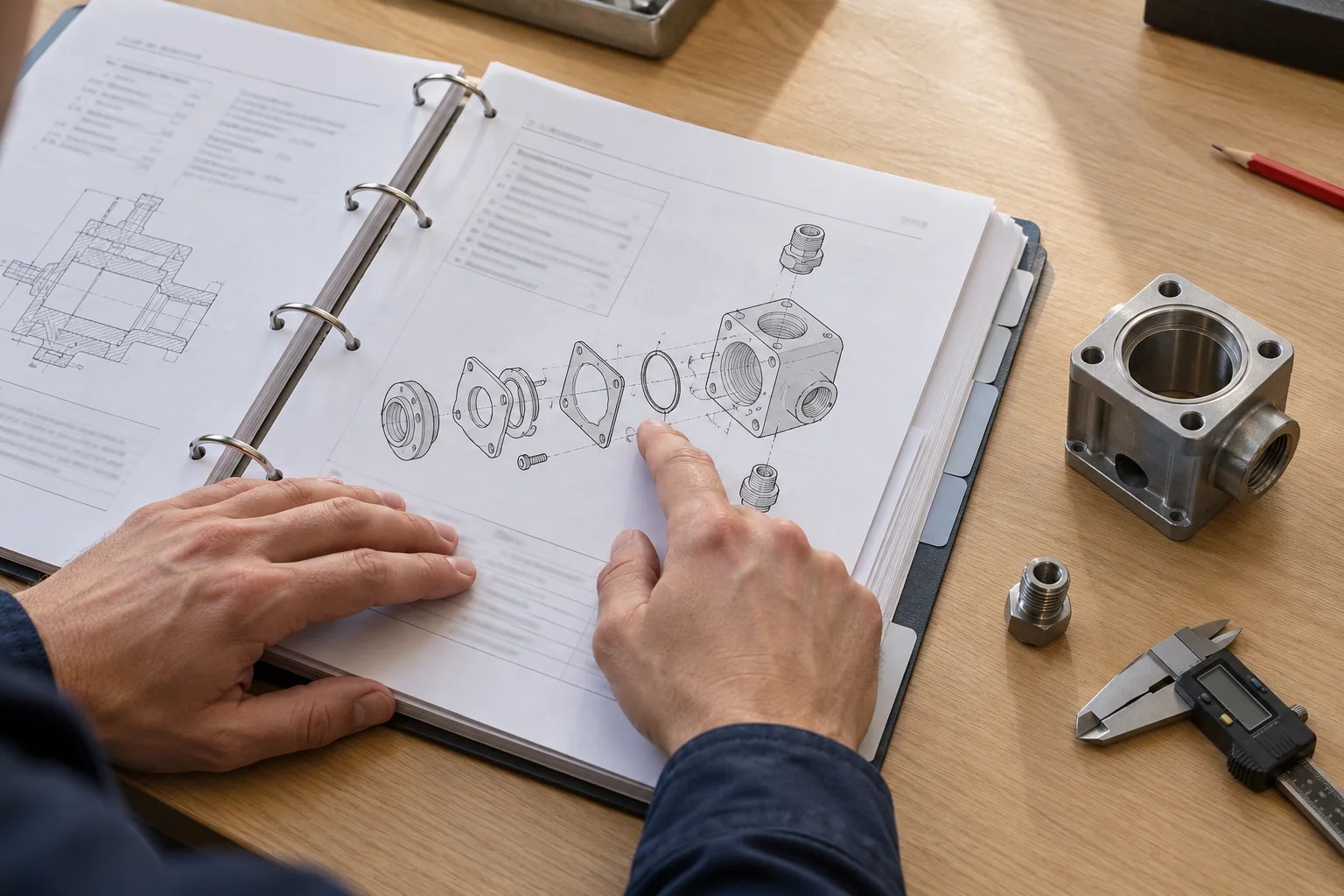
Technical documentation
AI assistant for manuals and catalogues
Problem: product information scattered across PDFs, files, emails and experienced staff.
Solution: a controlled AI assistant using authorised documentation.
Value: faster searches for internal teams, agents and support staff.
Operations
Dashboards and system integration
Problem: duplicated data and limited visibility across orders, production and sales.
Solution: data integration and operational dashboards.
Value: fewer manual steps and faster decisions.
An initial working session
Let’s start with 3 high-impact processes.
In a 45-minute session, we review 2–3 processes in your manufacturing business and identify where AI, custom software or integrations could reduce manual work, errors or response times.
3 practical opportunities
Level of complexity
Potential budget range
Recommended priority
Next technical steps
Book a manufacturing session
Tell us about the process, system or manual activity you would like to improve.
Frequently asked questions
Answers to common questions before starting a tech or AI project in manufacturing.
Do we need to replace our ERP or CRM?
No. In many cases, value comes from integrating existing systems more effectively, reducing duplication and manual steps.
Can we start with a single process?
Yes. This is often the best approach: a configurator, dashboard, portal or technical documentation assistant can start with a clear scope.
Can AI use our catalogues and manuals?
Yes, if the content is available and can be managed appropriately. We assess sources, permissions, updates, data quality and output controls before designing the solution.
Do you also manage infrastructure and maintenance?
Yes. We can design, integrate and manage the solution over time so the client does not have to handle the day-to-day technical complexity.
What kind of return can we expect?
It depends on the process. We generally look at reductions in time, errors, manual work and response times, alongside service quality and increased sales capacity.
Can we modernise existing custom applications?
Yes. We can work on code, architecture, usability and integrations, including AI components where they provide real value.
Want to understand where technology can improve processes, turnaround times and quality?
We start with a specific process in your business: technical sales, quotations, documentation, integrations, operations or after-sales. Then we assess what makes sense to build, automate or integrate.